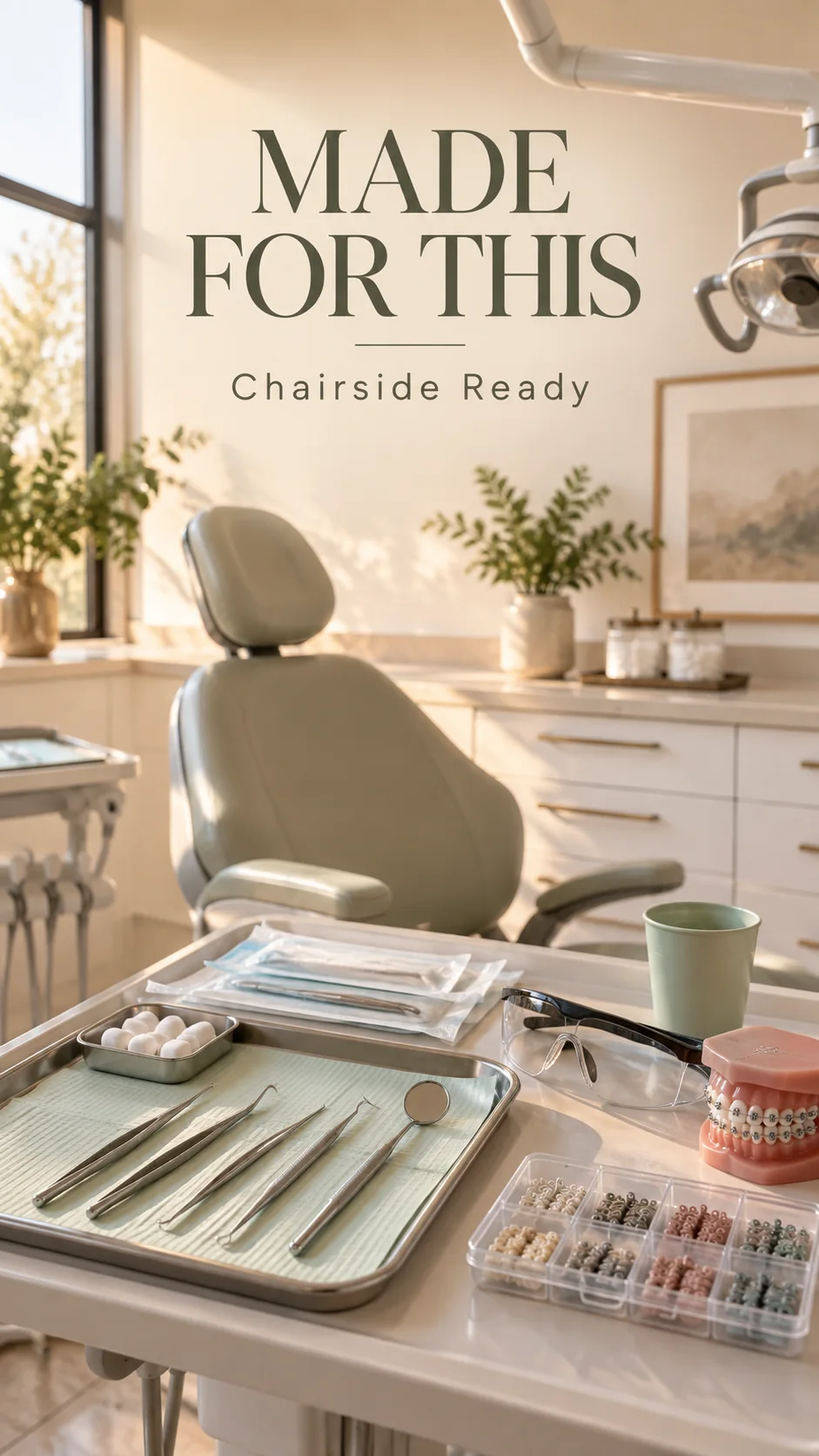
Chairside Ready: The Orthodontic Setup That Makes the Appointment Feel Calm
Orthodontic Assistant Education
A calm orthodontic appointment usually starts before the patient ever sits down. When the room is prepared with intention, the assistant is not scrambling for a missing item, crossing clean and contaminated zones, or opening drawers with gloved hands. The patient feels the difference too. A well-prepared operatory creates a quieter rhythm: the clinician can focus on treatment, the assistant can anticipate the next step, and the patient experiences a team that looks organized and confident.
The goal is not to make every appointment identical. Orthodontic visits vary, and every practice has its own approved protocols, products, and doctor preferences. The useful skill is learning to build a repeatable setup system that supports those differences without sacrificing infection prevention or patient safety.
Start With the Appointment, Not the Tray
Before setting out instruments, read the appointment type and any practice-approved notes that affect setup. A routine adjustment, records visit, bonding appointment, repair, or debond will not need the same materials. The fastest assistants are often not the ones moving the quickest; they are the ones who reduce unnecessary movement by knowing what the visit is supposed to accomplish.
Use your office’s checklist or preferred setup sequence as the source of truth. Pull only what belongs in the planned procedure, and keep backup items accessible without crowding the work surface. This prevents the tray from becoming a storage shelf and makes it easier to recognize when something is missing.
Build a Clean Zone on Purpose
Think of the operatory as a workflow, not just a room. Clean or packaged supplies should stay separated from used instruments and contaminated materials. Place sterilized instruments so packaging can remain intact until the proper point in the appointment, and keep frequently touched controls from becoming part of the tray.
CDC guidance for dental settings treats Standard Precautions as the minimum infection-prevention practices for every patient. Those precautions include hand hygiene, appropriate personal protective equipment, sharps safety, sterile instruments and devices, and cleaning or disinfection of environmental surfaces. In other words, a good setup is not only about convenience; it is part of safe care.
Get the Hand-Hygiene and PPE Rhythm Right
Gloves do not replace hand hygiene. CDC recommends hand hygiene before and after treating each patient, before putting on gloves, and immediately after removing them. Soap and water should be used when hands are visibly soiled; otherwise, an appropriate alcohol-based hand rub may be used according to facility policy and product instructions.
PPE should match the anticipated exposure. Dental personnel may need gloves, masks, protective eyewear or face shields, and protective clothing depending on the task. One common source of cross-contamination is touching cabinets, phones, charts, or computer controls with contaminated gloves. A strong chairside setup reduces those moments by placing what you expect to need inside the work zone before treatment begins.
Protect the Surfaces You Touch Most
Some surfaces in an orthodontic operatory are touched repeatedly during treatment: light handles, bracket trays, chair controls, unit switches, countertops, and computer equipment. CDC recommends that clinical contact surfaces be barrier protected or cleaned and disinfected between patients.
That makes the turnover process easier when you plan ahead. Place barriers before the patient arrives, and know which surfaces your office requires to be disinfected after the visit. Cleaning removes visible debris and organic material and should come before disinfection when a surface is soiled. Follow the manufacturer’s instructions for the products your practice uses, including contact time.
Treat Sharps and Wires Like the Hazard They Are
Orthodontics may not look like a surgical environment, but sharp items still deserve deliberate handling. Needles, burs, scalers, orthodontic wires, and other sharp instruments can cause percutaneous injuries. CDC recommends engineering and work-practice controls to reduce these exposures, and used sharps should go into puncture-resistant sharps containers located as close as practical to the area where they are used.
OSHA’s Bloodborne Pathogens requirements also apply to dental workplaces where employees have occupational exposure to blood or other potentially infectious materials. That means sharps safety is not a “nice to have.” Avoid unsafe recapping practices, follow the office exposure-control plan, and never improvise around an exposed sharp because the room is busy.
Create Appointment-Specific Mini Setups
Once the safety foundation is consistent, build small appointment templates. A routine adjustment setup might emphasize the instruments and materials your clinician regularly requests for archwire changes and elastic placement. A bonding appointment will usually require a different sequence of approved materials and isolation supplies. Repairs and debonds have their own patterns.
The point is not to memorize a universal tray. There is no single setup that fits every orthodontist, product system, or patient. Instead, learn the logic of your practice: what comes first, what must remain clean, what can stay packaged until needed, what requires special handling, and what the clinician reaches for next. That is how an assistant becomes anticipatory without guessing.
Reset the Room Completely
The appointment is not finished when the patient stands up. Used instruments should enter the practice’s approved transport and reprocessing workflow, single-use items should be discarded appropriately, sharps should be contained safely, and clinical contact surfaces should be reset according to office protocol. Restocking at the end of turnover prevents the next appointment from inheriting a shortage.
A complete reset also includes visual order. Put the room back into the same starting position whenever possible. When every operatory begins from a familiar baseline, the team can notice missing supplies faster and handoffs become easier.
Speed Comes From Standardization
The best chairside systems are boring in the best way. The same safe steps happen in the same general order, while the procedure-specific details change as needed. That consistency reduces mental load, protects clean zones, and helps the assistant stay present with the patient instead of thinking three drawers ahead.
Confidence at chairside is not about rushing. It is about preparation so complete that the appointment can move smoothly without looking hurried. Build the room correctly, protect the workflow, and let repetition turn good habits into professional rhythm.
PRACTICAL TAKEAWAY
Create a one-page setup checklist for the three orthodontic appointment types you assist with most often. Divide each checklist into four zones: room barriers and PPE, instruments, procedure-specific materials, and turnover/reset. Review the list with your supervising clinician or office infection-prevention lead so it matches the practice’s policies.
CALL TO ACTION
Before your next clinic day, choose one operatory and study the path your hands take from patient seating through turnover. Identify one unnecessary drawer opening, one surface that gets touched too often, and one item that could be staged more intelligently. Small workflow improvements can make the room safer, calmer, and easier to run.
SOURCES & FURTHER READING
Centers for Disease Control and Prevention. “Standard Precautions — Dental Infection Prevention and Control.”
https://www.cdc.gov/dental-infection-control/hcp/summary/standard-precautions.html
Centers for Disease Control and Prevention. “Sterilization and Disinfection — Dental Infection Prevention and Control.”
https://www.cdc.gov/dental-infection-control/hcp/summary/sterilization-disinfection.html
Occupational Safety and Health Administration. “Bloodborne Pathogens and Needlestick Prevention — Quick Reference Guide.”
https://www.osha.gov/bloodborne-pathogens/quick-reference