
A busy orthodontic schedule can feel chaotic before the first patient even sits down. One habit helps more than it seems: set up with the procedure in mind, not just the instrument list.
Instead of memorizing tools one by one, think through what the appointment is trying to accomplish. What will the doctor likely remove? What will be replaced? What needs to be within reach? What should already be open and ready?
Start with the core instruments
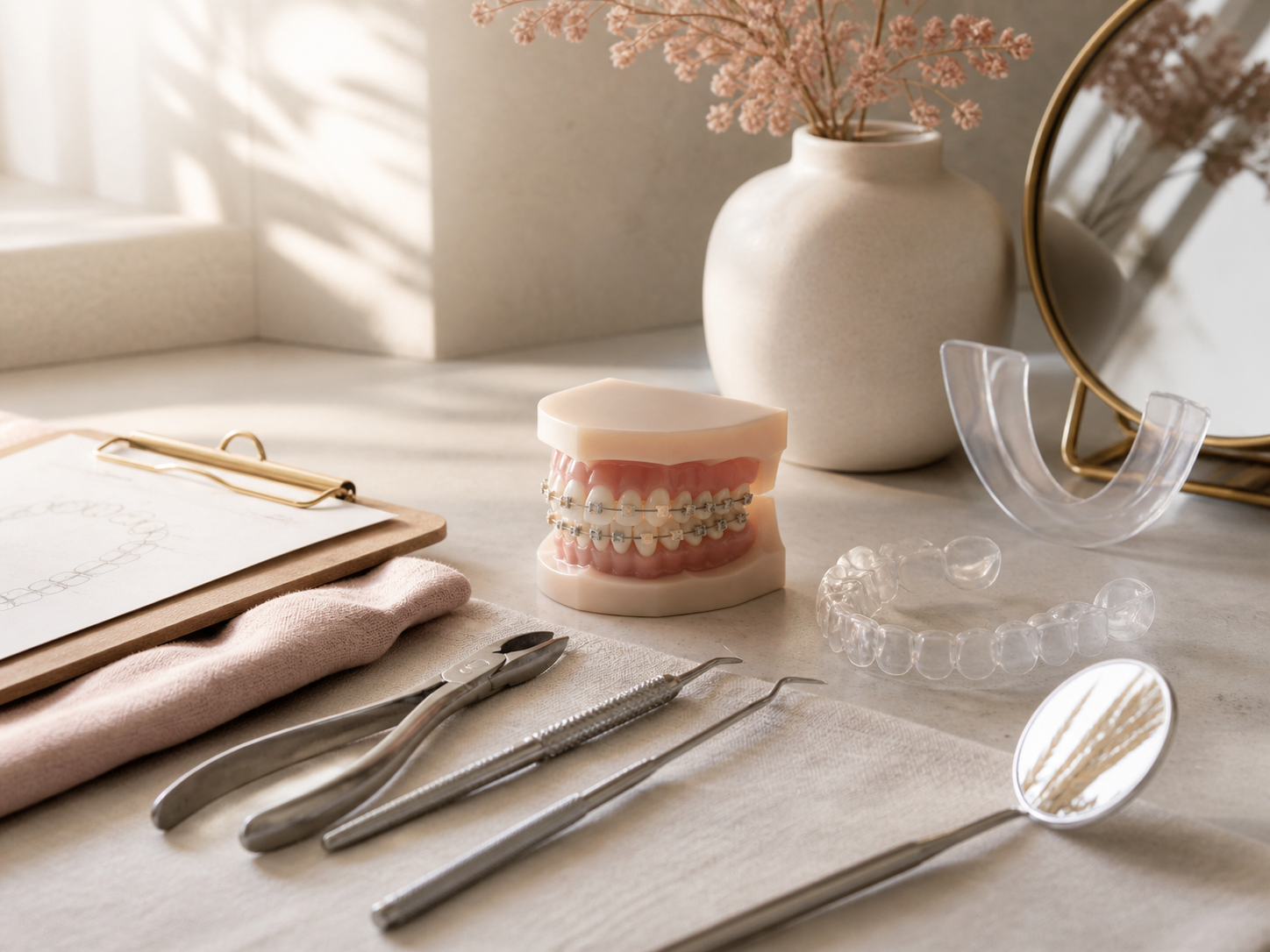
For many routine appointments, you may frequently see a mouth mirror, cotton pliers, Weingart pliers, Mathieu pliers, distal end cutter, ligature cutter, and bracket tweezers. The exact setup depends on the procedure and office protocol, but the goal is the same: the doctor should not have to stop and wait for the next obvious item.
Learn the flow, not just the names
A new assistant may know that a distal end cutter cuts wire. A more confident assistant starts noticing when it will probably be needed. If the archwire is being replaced, think ahead. If elastics are changing, have the right supplies ready. If a bracket repair is scheduled, gather curing materials, bracket tools, and isolation supplies before treatment begins.
That anticipation is where chairside confidence begins. It is not about guessing or rushing. It is about observing the appointment, respecting office protocol, and making the next safe step easier.
Create a tiny pre-patient checklist
- Chair ready
- Tray complete
- Suction working
- Air and water ready
- Supplies stocked
- Patient chart reviewed
It sounds simple because it is. Simple systems are often what keep a busy day from becoming stressful. A 30-second pause before the patient arrives can save repeated interruptions later.
One good learning trick
When you are still learning instruments, do not try to memorize an entire drawer at once. Choose three tools per day. Learn the name, what it does, and when you are most likely to hand it to the doctor. By the end of one workweek, you may have reviewed 15 instruments without needing a long study session.
This small-piece approach works especially well when you are balancing orthodontic assisting with motherhood, school, family responsibilities, or another job. Learning in small pieces still counts.